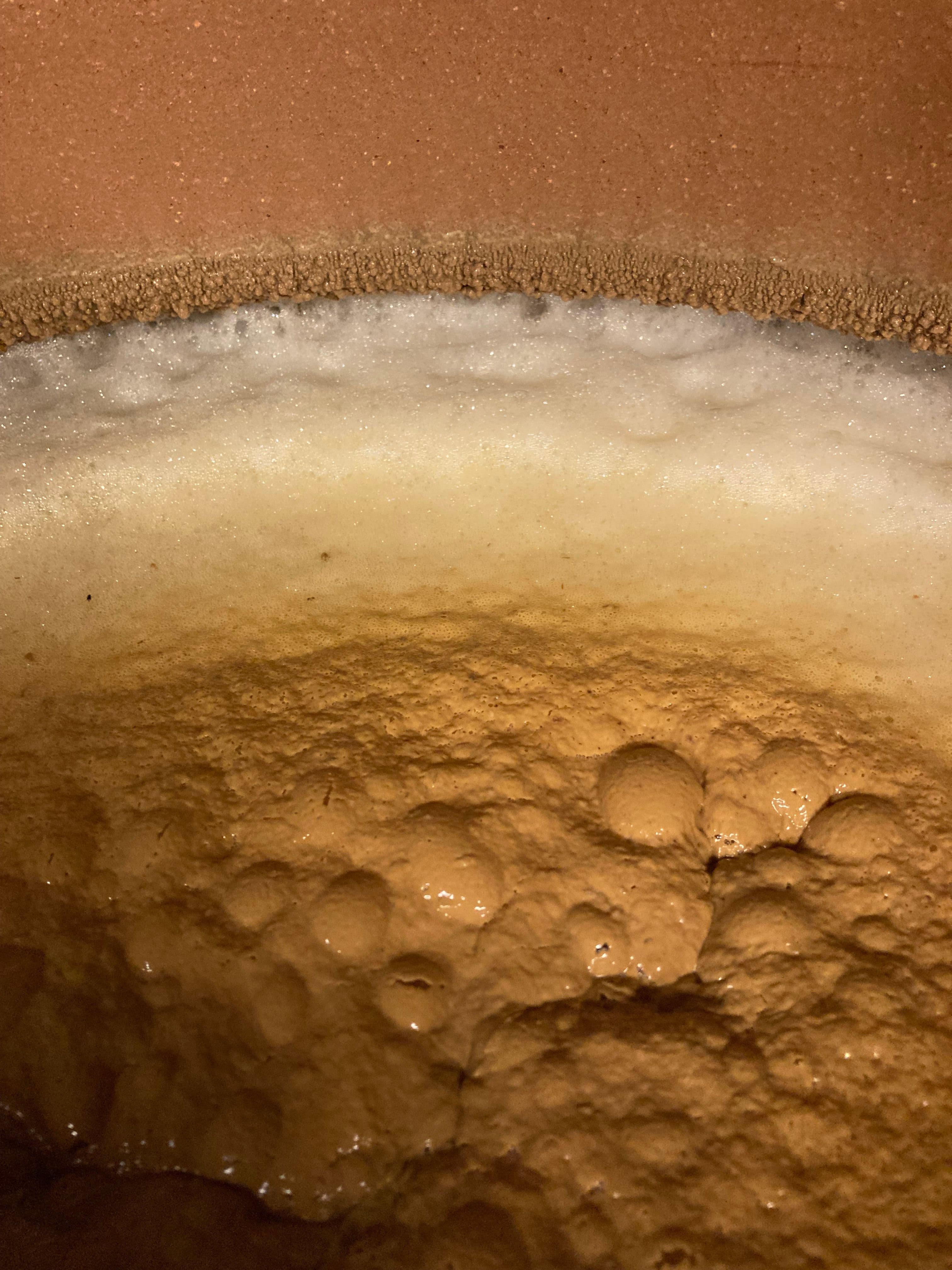
Reduktion
For us, reduction is something very positively associated, desired, in fact, and a natural occurrence in our wines. It shows itself, above all, in the wine's aromatics, which can carry hints of flint, popcorn, struck match, or burnt rubber.
The aromatic sulphur compounds produced by yeasts and bacteria tend to appear more often in wine when the vines root deep into stony, less fertile soils. Lower nitrogen levels in the soil usually also mean less yeast-available nitrogen in the must, a slower fermentation, and, as a result, more reductive aromas in the young wine. Over the course of ageing on the natural lees in barrel or amphora — often for years — these aromas integrate positively, ultimately bringing more complexity and tension to the wine.
In chemistry, reduction refers to the gain of electrons (either the uptake of hydrogen or the release of oxygen). This is why our wines are often reductive in their youth, and only change in character with ageing (oxidation).